Why Personalized Bedtime Stories Work — The Science of Story
May 30, 2026
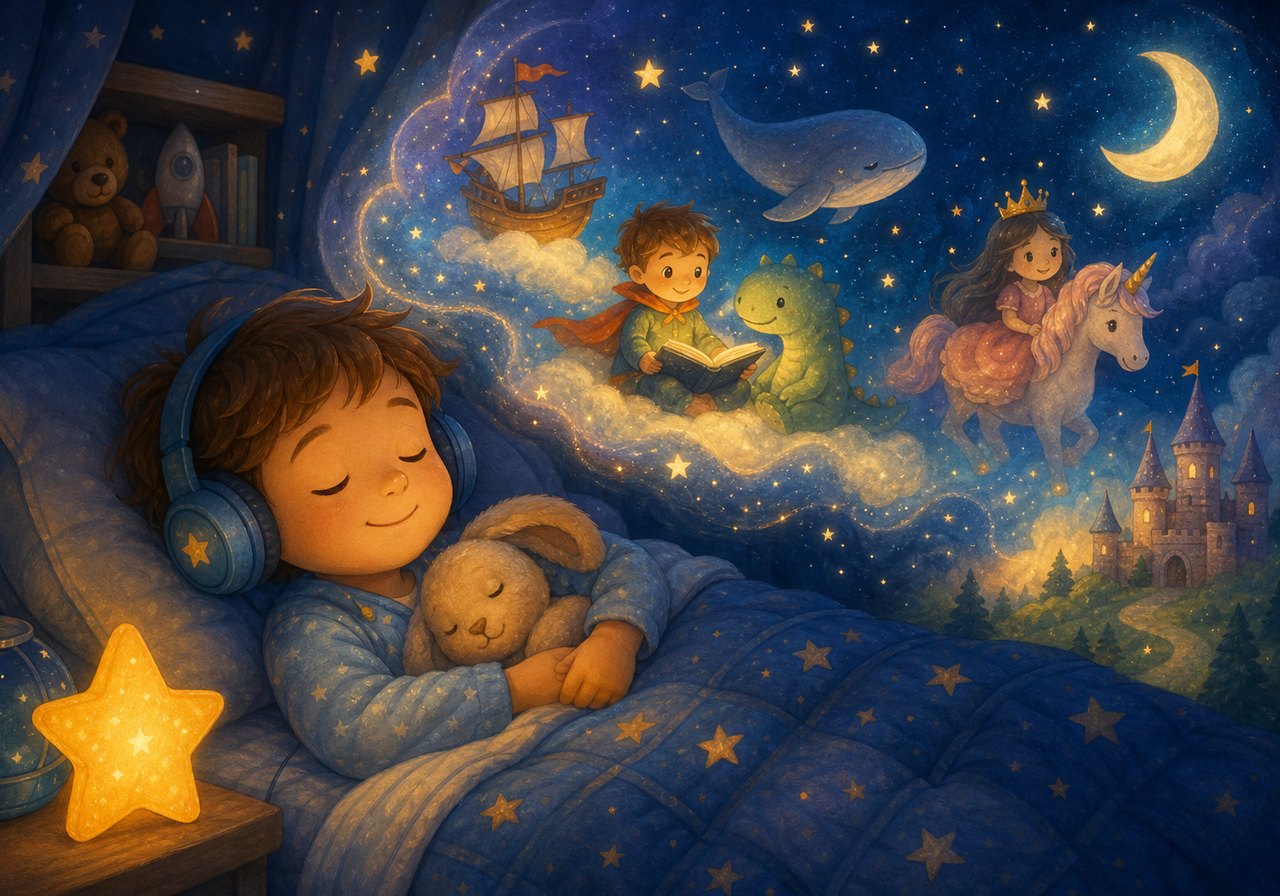
"Read it again." If you've heard those three words a hundred times, your child's brain is telling you something important. Stories aren't just entertainment for kids — they're one of the most powerful learning tools we have. Here's what the research actually shows.
A child's brain on story
When young children listen to a story, brain-imaging research shows strong activation in the regions responsible for language and making meaning. Listening isn't passive. The child is busy constructing the whole world in their head — the faces, the places, the feelings. That construction is the learning.
Why audio beats animation
There's a sweet spot, sometimes called the "Goldilocks effect," in how stories are delivered to kids. Studies comparing audio-only stories to fully animated ones found that with audio, children do more of the imaginative work themselves — they have to picture it. Animation hands them everything; audio invites them in. For building imagination and engagement, hearing a story does something a screen can't.
This is part of why a bedtime audio story is such a gift: no screen, no overstimulation before sleep, just your child's imagination doing what it does best.
Why "the hero is me" changes everything
Here's where personalization earns its keep. When the brave, kind hero of the story shares your child's name, age, and the things they love, the psychological distance between "the character" and "me" nearly disappears. The lesson stops being advice about someone else and becomes a story about who they are. Children are remarkably moved when a story clearly belongs to them — many parents describe their child going quiet and wide-eyed, certain the story was written just for them. Because it was.
Stories build empathy and good behavior
The benefits go beyond the warm fuzzies. A meta-analysis spanning thousands of children across multiple countries found that reading stories to kids is associated with stronger empathy and prosocial behavior. Stories let children practice perspective-taking — stepping into someone else's feelings — which is the foundation of kindness, honesty, and courage alike.
How to get the most out of story time
- Go audio at bedtime. Save screens for daytime; let the night be for imagination.
- Pick a lesson that fits this week. Stories work best when they quietly mirror what your child is going through.
- Make them the hero when you can. The more the story belongs to them, the deeper it lands.
- Resist the urge to explain. Let the story do its work. The lesson seeps in overnight.
Where StoryWhisper fits
We built StoryWhisper around exactly this science: a personalized audio bedtime story, where your child is the hero, built around the single value you most want them to learn. You choose the lesson and tell us about your child; we craft the story and narrate it warmly.
Make tonight's story the one that teaches it
A personalized bedtime story, built around your child and the value you choose.
Create your child's story →